
Home » Woodwind Lessons » Flute Maintenance: Tips for the well-being of your flute
Flute maintenance is generally minimal, as your instrument should arrive in a pristine and fully set-up condition from the factory. Although the flute is a precision instrument, with the right care it should provide many years of reliable service and enjoyable playing.
When assembling the flute, spread your hand gently over the keys of the middle section. Hold the instrument with even, firm pressure and carefully twist the head joint into the body. The parts should fit together easily and should never need to be forced.
Line up the mouthpiece with the general alignment of the flute’s keywork. Once the head joint is attached, turn the instrument over and twist the foot joint onto the middle section. Align the flat keys of the foot joint with the lower keys on the body.
You can check correct alignment by placing your right-hand fingers on the bottom four keys. Your little finger should be able to reach the foot joint keys comfortably.
To disassemble the flute, simply reverse this process. Use a gentle twisting action while applying even pressure to the keys, avoiding any pulling or forcing.
If your home is free from clumsy pets and children, you may wish to consider using a flute stand. This can encourage more spontaneous practice, as the flute is already set up and ready to play without assembly.
After playing, moisture can build up inside the instrument. Regular use of a pad saver and pull-through cloth is an important part of good flute maintenance, helping to protect the pads and internal mechanism.
Over time, your flute may develop finger marks, grease, or silver tarnish. These can be easily removed by gently polishing the body and keys with a silver cloth. Take care not to rub too firmly, as this may accidentally dislodge a spring. While this is not usually serious, it may require a visit to a woodwind repairer to correct.
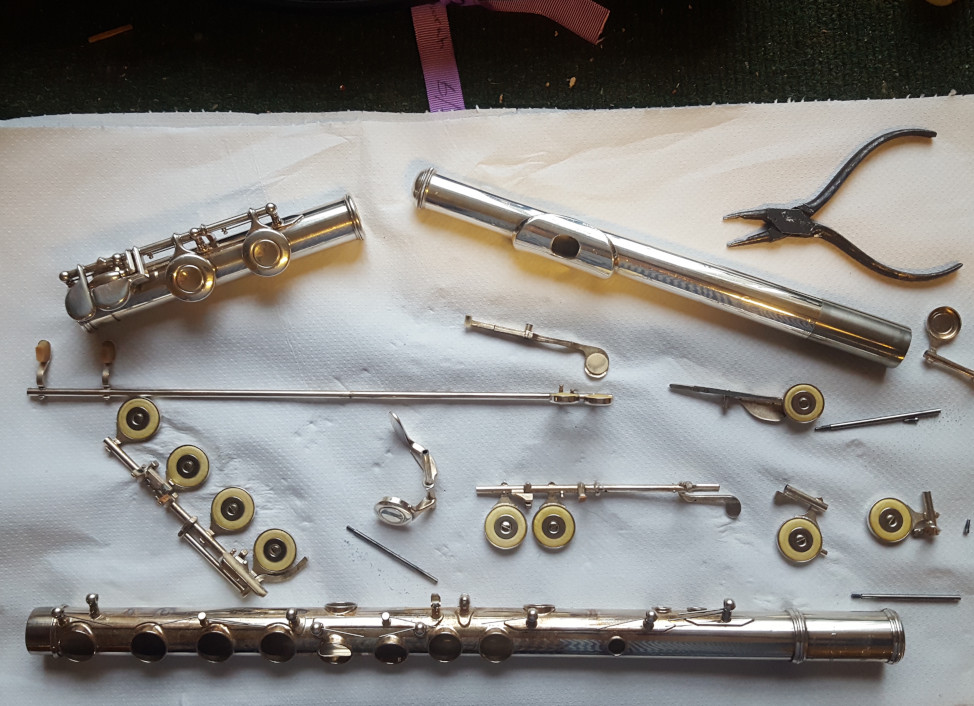
If the keys begin to feel slower or less responsive, a very small drop of key oil can often help. However, if your flute maintenance budget allows, an annual service by a woodwind repairer is highly recommended to keep the instrument performing at its best.
We hope you found our article on flute maintenance tips useful. If you would like to enquire about a full service, click to read more about our instrument repair service.
See also: Maintenance tips for SAXOPHONE | VIOLIN
The Booths Music repair shop is located in our town centre workshop in conjunction with Studio Circle Office Space.
Keep up to date with our latest student and tuition news, plus offers and general announcements from staff and tutors at Booths.